Hi, my name is Paras Rana, and I’m currently in my third year at UVic, pursuing a combine major in Computer Science and Health Information Science. This fall, I’m taking EDCI 338: Social Media and Personalized Learning, and I’m looking forward to exploring how digital platforms can be used to enhance learning experiences and make education more engaging and personalized
What does it mean to Network Using Social Media in an Educational or Professional Context?
The advent and proliferation of the Internet have changed various dynamics of modern life, with education being one of the impacted fields. The Internet has contributed to the creation and impressive uptake of social media applications, such as Facebook, X, Instagram, and Snapchat. People use these applications to network with others at different levels. In some cases, networking through social media in an educational or professional context entails intentional use of digital platforms to connect with individuals, communities, and organizations for the purpose of learning, collaboration, and professional growth. Unlike casual social media interactions, this type of networking is purposeful because it seeks to create and nurture relationships that provide access to new ideas, diverse perspectives, and practical resources.
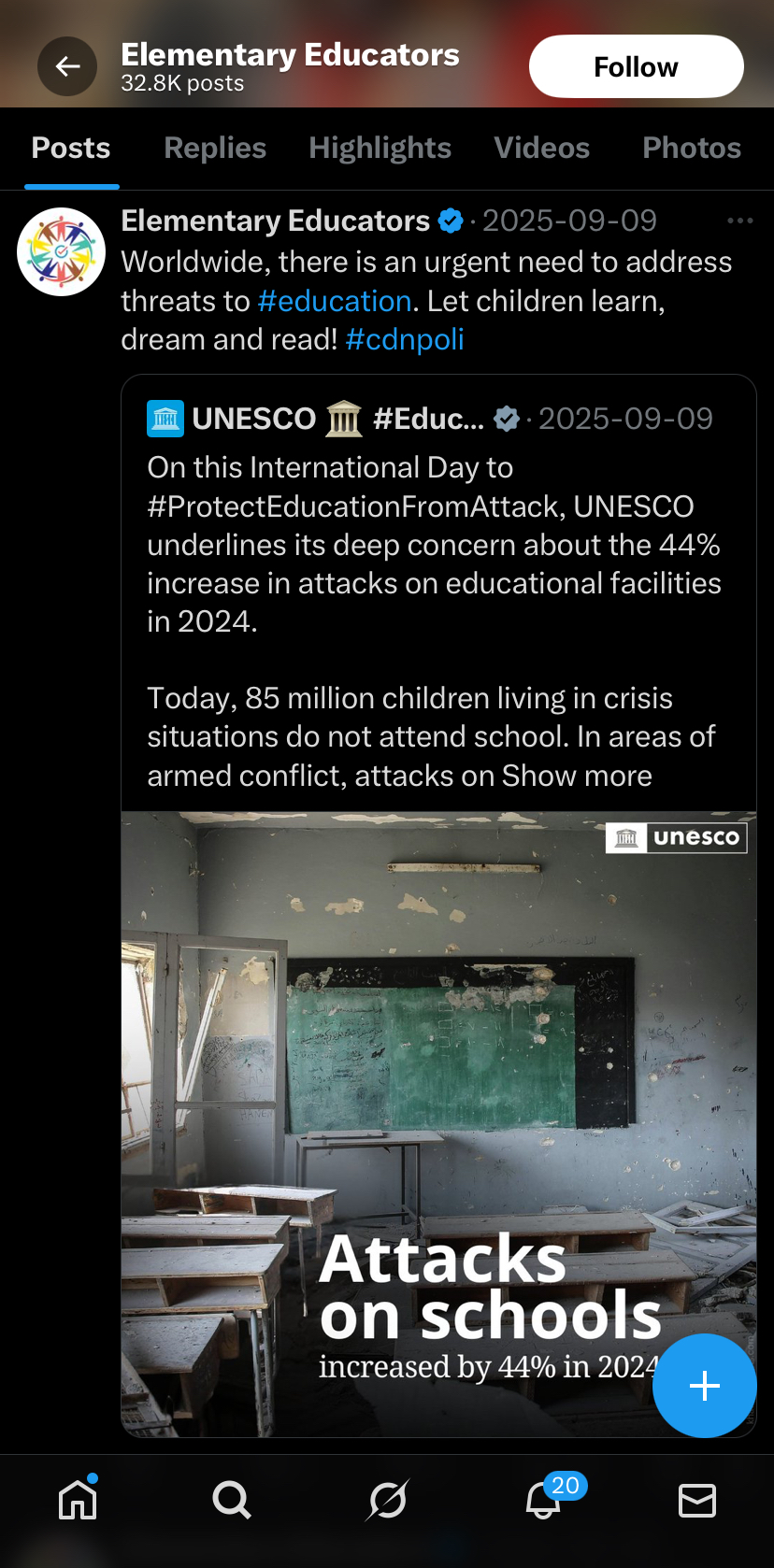
The image on the right shows a platform for teachers where they share insights and challenges they faced in their profession.
From the perspective of learners and educators, networking via platforms like Facebook and LinkedIn transforms social media from a space of entertainment into a tool for building knowledge and professional identity (Hass et al., 2020). Such an interaction allows participants to share insights, engage in meaningful discussions, and stay informed about current trends in their respective fields. Furthermore, it creates opportunities for dialogue with professionals and peers outside one’s immediate physical environment, thereby expanding the boundaries of traditional learning and collaboration.
One outcome of networking via social media is the development of a Personal Learning Network (PLN), which is essentially a self-directed, dynamic system of connections that supports continuous growth. By building a PLN, individuals can access real-time advice, curated resources, and ongoing conversations that may not be available within their immediate workplace or school. For instance, a professor might follow thought leaders in pedagogy, join subject-specific communities, and participate in X chats, hence creating a tailored stream of professional learning. Similarly, a student might connect with classmates, industry professionals, and academic organizations to gain support and exposure to opportunities.
People who use PLN enjoy numerous benefits. Firstly, PLN encourages lifelong learning by providing constant access to evolving knowledge. Secondly, it promotes collaboration and idea exchange, allowing people to contribute to collective problem-solving while learning from others’ experiences. According to Moreillon (2016), being part of a connected community allows professionals to collaborate, share ideas, and solve meaningful problems together. Additionally, PLN enhances professional visibility and identity, since active participation in online communities can highlight one’s expertise and commitment to the field. For students, PLN provides a sense of belonging and motivation as they see themselves to be part of a larger community striving toward similar goals.
Nevertheless, the effectiveness of PLNs requires discernment in that one must be able to filter reliable sources from misinformation as well as balance online engagement with offline responsibilities. When managed thoughtfully, networking through social media and cultivating a PLN becomes a powerful strategy for academic success and professional advancement. It transforms learning from a solitary activity into a connected, community-driven process that continues well beyond formal education.
References
Haas, M. R., Haley, K., Nagappan, B. S., Ankel, F., Swaminathan, A., & Santen, S. A. (2020). The connected educator: personal learning networks. The Clinical Teacher, 17(4), 373-377.
Moreillon, J. (2016). Building your personal learning network (PLN): 21st-century school librarians seek self-regulated professional development online. Knowledge Quest, 44(3), 64-69.
How would you describe your current personal and professional digital identities?
Today, people share various things about themselves on the internet, meaning that they end up creating digital identities. Similarly, I use various social media platforms, such as Facebook, Snapchat, and X, to connect with people, and I would say that such connections shape my personal digital identity. Digital personal identity denotes online presence that portrays who I am. Therefore, these platforms mirror my interests, hobbies, and relationships, hence forming a visible footprint of who I am in everyday life. Experts suggest that even the casual posts that people make become part of their digital trail that shapes how others perceive them (Osborne, 2016). Undeniably, the information I share on social media platforms sometimes goes beyond my intended audience, something that Osborne (2016) emphasized. Therefore, I resonate with these findings because personal posts somehow contribute to a broader image of my personal values and personality.
Unlike my personal digital identity, my professional digital identity (the way I portray myself in professional and academic contexts), is more intentional and strategic as well. In the course of shaping my professional growth, I use LinkedIn and many other academic platforms to showcase my achievements, establish connections with peers, and signal career aspirations. White and Le Cornu (2011) explain the Visitors and Resident theory, which is crucial to explaining my interactions in the digital arena. Consistently, I believe that I act as a ‘visitor’ when gathering information and change to a ‘resident’ when establishing networks and maintaining visibility. Meanwhile, Rowland and Estevens (2024) offer insights into this topic as they argue that algorithms and data systems shape users’ digital identities. This suggests that my professional image is not entirely self-crafted because platform logic also plays a core part in building my digital identity. Hence, my personal and digital identities illustrate how I participate and how I am represented in the digital environment.
In what ways are they similar or different?
I believe my personal and professional digital identities have some similarities and divergences as well. They are both forms of how I present myself and are largely influenced by what I choose to share. For instance, when I casually share pictures, some people will see creativity while others see leadership, both of which indirectly impact my professional presence. Yet, the identities are linked and sometimes complement each other. I stay careful and post cautiously because I acknowledge that what may seem right in personal life may be evaluated differently in professional contexts. Studies further accentuate that digital identities are multifaceted because they are shaped by self-expressions and external data processes (Rowland & Estevens, 2024). To some extent, my identities are similar in that the algorithm influences how they form. Meanwhile, the differences between the two profiles lie in purpose and audience. The reason is that my personal identity mainly leans towards building relationships and expressing my personal values as opposed to my professional identity, which seeks to improve credibility and career opportunities.
In this shared video, the speaker highlights the importance of secure identification, whether digital or physical, especially in the context of participating in modern society. The speech highlights how my digital identities could help shape my opportunities in the ever digitalizing world
References
Gruener, D (2020). Digital identity – weighing the risks of misuse and missed use | Dakota Gruener | TEDxMarrakesh
Osborne, N (2016). What Do Your Digital Footprints Say About You? TEDx Talkshttps://www.youtube.com/watch?v=RVX8ZSAR4OY
Rowland, J., & Estevens, J. (2024). “What is your digital identity?” Unpacking users’ understandings of an evolving concept in datafied societies. Media, Culture & Society, 47(2), 336-353. https://doi.org/10.1177/01634437241282240 (Original work published 2025)
White, D. S., & Le Cornu, A. (2011). Visitors and Residents: A new typology for online engagement. First Monday.
How do you define inclusion in education, and how does that definition align (or not align) with your day-to-day practices?
Although the people may see inclusion from different angles, I perceive inclusion in education in terms of designing learning environments that respect diversity as a strength, ensuring every student, regardless of abilities, background and culture, can access, participate and contribute meaningfully to the learning community. Consistent with Shelly Moore (2016), inclusion does not only entail placing all learners in the same space but also creating communities where there is no ‘others.’ Such an environment is core to ensuring every learner contributes positively through their unique strengths.
Meanwhile, this definition aligns closely with Universal Design for Learning’s (UDL) perspective that emphasizes proactive design to remove barriers and promote learner agency by offering multiple avenues of engagement, representation, and expression. Indeed, learning materials designed to educate learners should be presented in varying forms (visuals, audios and hands-on) to ensure it is accessible to and suitable for diverse learners. More so Peter et al. (2020) demonstrate inclusion in practice in their case study on UDL in library instruction. The authors illustrate how small but intentional design changes (offering materials in varied formats and flexible participation) can enhance accessibility of learning materials to a diverse group of learners.
The definition aligns perfectly with my idea of inclusion and how I utilize it in my PLN and digital platforms. My PLN is diverse because it features people from different age groups, cultures, professions, and races. An inclusive PLN should consider the aspect of diversity and its impacts on learning. It should acknowledge the idea that people come from different backgrounds and cultures. Meanwhile, it is core to understand that people exhibit different learning styles, and shared content should be varied accordingly.
Fig 1. Shows an example of a post that utilizes UDL and diversity concepts. It is a social media post that utilizes visual representation (colors), concise text, and a link to additional content. It, therefore, aligns with UDL and diversity principles that emphasize offering multiple means of representation and engagement.
The definition for “diversity” guides my daily practices, as it challenges me to ensure my content and materials give every learner equal opportunity to succeed and learn new things. Indeed, I acknowledge the value of offering multiple ways to access materials and demonstrate knowledge. In my digital interactions, I utilize UDL concepts to improve inclusion by designing content that provides multiple ways for followers to access and engage with information.
Titled “Universal Design for Learning,” The above video shows how UDL can enhance the aspect of inclusion in education. The video explains how educators can improve inclusion by ensuring followers have equal opportunities to succeed. It recommends the use of flexible teaching methods and materials in presenting learning materials and content.
Conclusion and Summary
In conclusion, PLN is a core dimension that continues shaping my professional development and ambitions. In everyday interactions, I connect with a system of people, resources, and digital tools to learn and share ideas with like-minded people. With awareness of the UDL framework and inclusion in education, I ensure the content I share in digital spaces gives every member of my audience equal learning opportunities. For example, I acknowledge the value of offering content in various formats (audio, video, images, and text) to guarantee my audience gets the intended message regardless of their backgrounds and capabilities. Thus, UDL concepts (among other inclusion tenets) have been a core pillar in regard to how I share my content with my followers on digital platforms.
Peter, Samantha H. and Clement, Kristina A. (2020) “One Step at a Time: A Case Study of Incorporating Universal Design for Learning in Library Instruction,” Scholarship of Teaching and Learning, InnovativePedagogy: Vol. 2 , Article 3. https://digitalcommons.humboldt.edu/sotl_ip/vol2/iss1/3
Teaching in Education (2019). Universal Design for Learning: UDL Retrieved from https://www.youtube.com/watch?v=gmGgplQkrVw